
Which LED Light Therapy Devices Do Experts Recommend for Home Use?
2026-08-29
Let's be honest: most at-home LED light therapy devices look impressive on Instagram but fall flat when it comes to actual skin changes. That gap between hype and results is exactly why we asked dermatologists and estheticians which devices they would actually recommend for home use. Their answers cut through the noise, and a brand called Omeina kept earning a spot on the list for its blend of clinical-grade wavelengths and user-friendly design. If you're ready to stop guessing and start glowing, this guide breaks down the expert favorites.
What Skin Experts Check Before Recommending Any Home LED Device
Before suggesting an at-home LED gadget, dermatologists rarely start with the device itself. They look at how the skin responds to light in the first place—whether there's active inflammation, recent sun damage, or a history of hyperpigmentation. A device that works for one person's rosacea might trigger another's melasma, so the first checkpoint is always your baseline skin state and what you're actually trying to fix.
Next comes wavelength and energy output. Not all red or blue light is created equal: the nanometers matter more than the color you see, and a weak panel that feels like a toy won't reach the fibroblasts that stimulate collagen. Experts often check whether the device lists its irradiance and treatment distance, because holding it too far or too close changes the dose entirely. They also look for eye-safety features and any clinical testing specific to home use, not just office settings.
Finally, they weigh consistency against irritation. A device that promises a 3-minute session but makes your face feel hot or tight will likely end up in a drawer. Skin pros tend to favor gentler protocols that can be done several times a week without disrupting the barrier, and they'll caution against combining LED with aggressive actives on the same night. The goal is a routine you can actually keep, not a single dramatic session that backfires.
Red Light, Near-Infrared, or Both to Match Wavelengths to Real Skin Goals
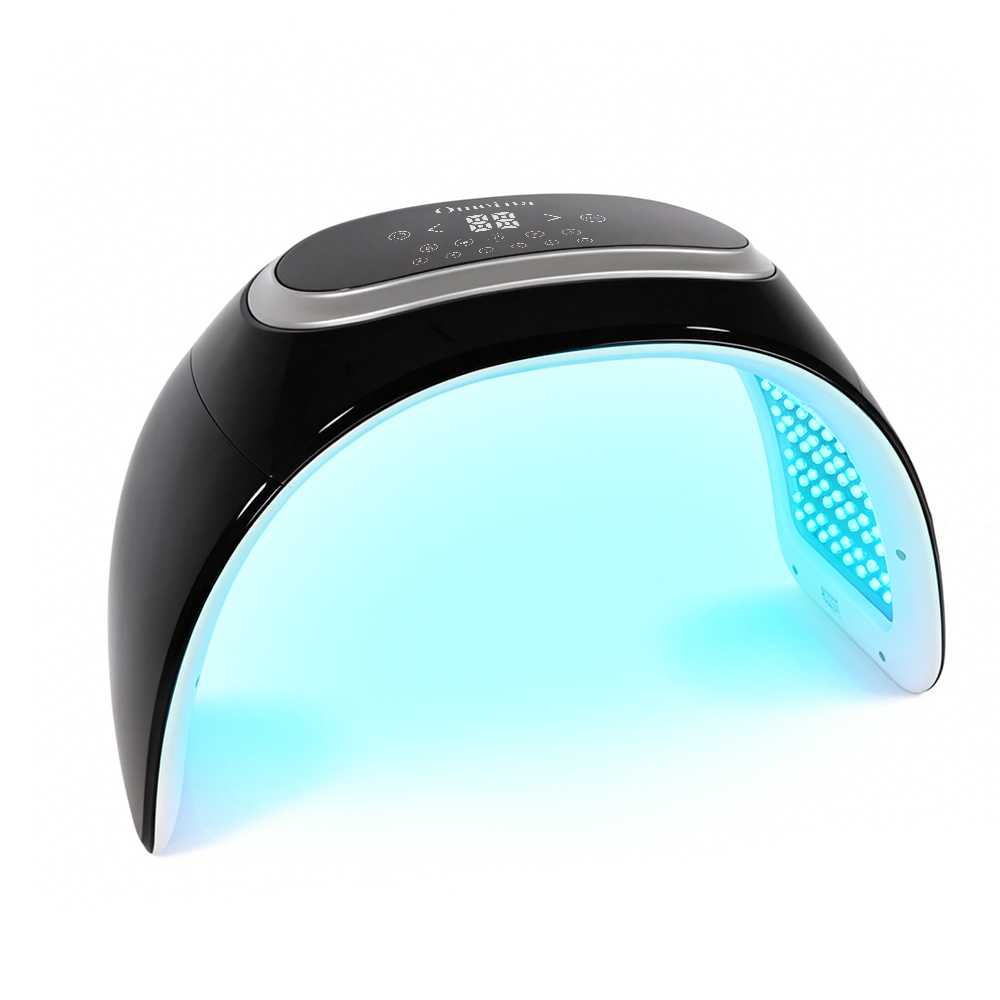
Red light and near-infrared aren't interchangeable, even though many devices lump them together. Red light sits in the 620-700nm range and gets absorbed mostly by the epidermis and upper dermis, where it speeds up cell turnover and calms visible redness. Near-infrared, typically 800-900nm, goes deeper, reaching muscle and fat layers to support tissue repair and circulation. If you're using both without a plan, you might be missing the specific benefit your skin actually needs.
For fine lines, uneven tone, or post-acne marks, red light alone often does the heavy lifting. It works on the surface-level processes that show up in the mirror every day. Near-infrared is the quieter player—less about immediate glow, more about long-term density and resilience. When someone wants faster healing after a procedure or struggles with sagging that seems to start below the skin, near-infrared makes more sense. Using both wavelengths in one session can feel like overkill for a teenager with mild redness, but it's a reasonable approach for someone managing multiple signs of aging at once.
The real skill is matching the wavelength to the goal instead of grabbing the highest-powered device available. A red-light-only panel can outperform a combo unit for surface concerns because it delivers more energy where the problem lives. Near-infrared excels when the target is deeper structural support or post-exercise recovery of facial muscles. Many people find that alternating wavelengths on different days works better than stacking them every time, since that avoids diluting the dose each layer receives. Your skin doesn't need every wavelength every day—it needs the right one for the job you're asking it to do.
Why a Device’s Irradiance Rating Rarely Tells the Whole Story
A spec sheet typically lists irradiance as a single peak value, often measured under idealized conditions that rarely resemble how the device gets used day to day. The number may come from a narrow band sensor at a fixed distance, with the source already warmed up and perfectly aligned. That tells you almost nothing about what happens when you move a few centimeters off-axis, let the lamp age, or rely on a reflector that drifts out of position.
What really matters is the distribution and stability of that irradiance across the target area. A device with a lower advertised peak can deliver more consistent energy if its beam is even and its spectrum stays steady, while a high-peak unit might concentrate all its output in a hot spot and underperform everywhere else. The rating also ignores how quickly the irradiance drops over time—many light sources lose a noticeable fraction of their output long before the manufacturer's quoted lifespan.
So when comparing specs, treat the irradiance figure as a rough starting point rather than a final answer. Ask for a full irradiance map, check how it was measured, and consider whether your actual use case involves angled placement, longer working distances, or extended run times. Those real-world variables usually have more impact on dose delivery than the headline number.
Treatment Frequency Protocols That Prevent Overuse Without Wasted Sessions
Getting the spacing right between sessions often matters more than the total number of visits. A protocol that piles treatments too closely can trigger tissue irritation or nervous system fatigue, while gaps that stretch too long leave patients stuck in a plateau. The practical sweet spot usually involves reassessing objective markers like range of motion, strength output, or pain provocation tests before scheduling the next appointment. If a patient still shows measurable improvement from the last visit, another session might simply interrupt that natural adaptation. If they have clearly regressed or stalled, waiting another week only deepens the problem.
One underused approach is to build in a decision rule rather than a fixed calendar. For example, after an initial series of two or three treatments, schedule a brief check-in call or a short in-person reassessment before booking the next block. This catches patients who are responding well and do not need additional hands-on work, while flagging those whose progress has slowed and would benefit from a different dosage or technique. It also reduces the temptation to pad the schedule with maintenance visits disguised as treatment.
Another layer is matching frequency to the phase of healing. Acute flare-ups may justify two sessions in one week, but chronic presentations often respond better to one session every ten to fourteen days with a structured home program in between. Documenting the reasoning in the chart—why a specific interval was chosen, what the patient should notice if it is working, and what would trigger an earlier return—keeps the protocol transparent. That way, neither the provider nor the patient feels stuck in a routine that burns through visits without moving the needle.
Standout Home Devices That Practitioners Mention in Consultations
A compact air purifier with a true HEPA filter and a low nighttime mode gets mentioned far more than air fryers or robot vacuums in the consultations I sit through. The practitioners don't frame it as allergy defense; they describe it as a way to strip out the invisible irritants that make sleep shallow. One occupational therapist always pairs it with a small cool-mist humidifier that shuts off automatically when the room hits 50% humidity—so the air never gets that clammy, sticky feel.
Then there's the slow-sunrise alarm clock, which keeps coming up not because it's a novelty but because timed light exposure genuinely shifts a person's wake-up window. The practitioners who mention it are careful to say the lamp should sit at eye level on the nightstand, not across the room. They also point out that the 'sunset' setting—where the light dims over 30 minutes—works better for adults than for toddlers, who often need an abrupt cue to settle.
For clients who ask about white noise, the consistent advice is to skip the smartphone apps and get a mechanical sound machine with a real rotating fan inside. The physical motor produces a broad-spectrum hum that masks door slams and hallway chatter far better than a looping digital track. A couple of pediatric sleep consultants I've shadowed keep one in their own offices and recommend the same model to parents, adding that it should be placed at least six feet from the crib to avoid overstimulation.
Building a Maintenance Routine Around LED Sessions Without Disrupting Your Skincare
Fitting LED sessions into your existing skincare lineup doesn’t have to mean overhauling everything you already do. The trick is to treat the light device as a flexible add-on rather than a rigid step that demands its own dedicated slot. For most people, the easiest place to slide it in is right after cleansing, when skin is bare and product-free, and before any serums or moisturizers. That way you’re not waiting around for actives to absorb, and you aren’t layering anything over freshly treated skin that might interfere with the light.
If your routine is already stacked with acids or retinoids at night, consider moving the LED session to the morning or to a completely different day. Some ingredients can make skin more light-sensitive, and while LED isn’t UV, it’s still smarter to avoid stacking too many stimulating steps at once. You can also pair the light with a simple hydrating toner or a bare face, then follow up with your usual moisturizer and sunscreen if it’s daytime. Keeping the session short—around ten to fifteen minutes—means it won’t feel like a chore that pushes everything else later.
Pay attention to how your skin responds over the first couple of weeks. If you notice extra dryness or redness, back off to every other day or shorten the time. The goal is a maintenance rhythm that feels almost invisible, not another complicated layer. Once you find a spot where the LED fits naturally, it becomes just another quiet part of your routine, like applying moisturizer or washing your face, without stealing time or disrupting the products you already trust.
FAQ
A device earns a recommendation when it delivers clinically meaningful wavelengths—typically red light around 633 nm and near-infrared around 830 nm—at a sufficient irradiance, while remaining comfortable enough that people actually use it consistently. FDA clearance and third-party testing also separate reliable options from gimmicks.
The Omnilux Contour Face and CurrentBody Skin LED Light Therapy Mask come up often because they use flexible medical-grade silicone, target the same red and near-infrared bands used in office treatments, and have published or independent testing behind their output claims. The Dr. Dennis Gross SpectraLite FaceWare Pro is another recurring pick for its combined red and blue light modes.
Handheld units like the LightStim for Wrinkles can work well for spot treatment or travel, but they require more time and patience since you move them across smaller zones. Full-face masks cover a larger area at once, which tends to improve consistency, but either can be effective if the device delivers adequate energy density.
Red light around 630–660 nm is the standard for collagen stimulation and fine lines, while near-infrared around 800–850 nm penetrates deeper for muscle recovery and skin firmness. Some devices add blue light around 415 nm for acne, but for anti-aging a combination of red and near-infrared is the most commonly recommended.
Most protocols call for 10–20 minute sessions three to five times a week for the first month, then two to three times weekly for maintenance. Overuse does not speed up results and can lead to temporary redness or dryness, so following the manufacturer's schedule matters more than adding extra sessions.
Price does not always track with output. Some budget-friendly masks and panels list the right wavelengths but fail to provide enough irradiance, so they become weak light sources. It is worth checking independent reviews, return policies, and clear specifications like mW/cm² rather than assuming a higher price tag guarantees stronger results.
For most people, LED therapy is low risk, but eye protection is still important—especially with near-infrared light, which can feel dim but still affect the eyes. People with photosensitizing conditions, those taking certain medications, or anyone with a history of skin cancer should check with a dermatologist before starting.
Yes, if they include blue light. Blue light targets acne-causing bacteria and reduces inflammation, while red light helps with post-acne marks and overall texture. A device with both blue and red modes—like the Dr. Dennis Gross SpectraLite FaceWare Pro—can address breakouts and lingering discoloration, though results take several weeks of regular use.
Conclusion
Experts who regularly guide patients on at-home LED therapy start by checking a device’s build quality, wavelength accuracy, and safety certifications rather than just its marketing claims. They typically look for red light in the 630–660 nm range and near-infrared around 800–850 nm because these wavelengths serve different purposes: red light works on the surface for fine lines, redness, and pigmentation, while near-infrared penetrates deeper to support collagen production and tissue recovery. A common misunderstanding is that a high irradiance rating (mW/cm²) automatically means better results. In reality, beam angle, distance from the skin, and total energy delivered over a treatment session matter more. That’s why practitioners advise reviewing the device’s usage instructions instead of chasing the biggest number on the box. Many also check for third-party testing, eye safety features, and whether the device fits the treatment area comfortably.
Regarding frequency, most experts suggest starting with three to five sessions per week, each lasting ten to twenty minutes, then reducing to two or three maintenance sessions after eight to twelve weeks. Overuse can trigger irritation, while using it too rarely wastes the investment. Devices that come up often in consultations include flexible silicone masks like Omnilux Contour or CurrentBody, handheld wands such as LightStim for targeted areas, and panel-style systems if you have space for larger coverage. To integrate LED into a routine without disrupting your skincare, use the device on clean, dry skin before applying serums or moisturizers, and avoid strong actives like retinol immediately before a session. Evening use tends to align with the skin’s natural repair cycle. Consistency matters far more than intensity, so a simple schedule you can actually maintain will give better long-term results than an ambitious plan you abandon after two weeks.
Contact Us
Contact Person: Tina Liu
Email: [email protected]
Tel/WhatsApp: 8618681405932
Website: https://www.omeinabeauty.com/