
How Leading ODM Tact Switch Manufacturers Are Shaping the Future of User Interface Design
2026-06-13
User interfaces are evolving faster than ever, and behind every responsive click lies a critical component that often goes unnoticed: the tact switch. As designers push the boundaries of haptic feedback and durability, leading ODM manufacturers like KEJIAN ELECTRONICS are redefining what's possible. This shift isn’t just technical—it’s transforming how we experience everyday devices, from smart home controls to wearable tech. So what does the future hold? Let’s explore the innovations driving the next wave of interface design.
The Silent Revolution in Tactile Feedback
Tactile feedback hasn't exactly been shouting from the rooftops. You'll spot its fingerprints in your phone's precise little buzzes, the subtle clicks under a laptop trackpad, or the way a game controller seems to breathe in your hands. It's a quiet evolution, one that's traded the crude vibrating motors of old pagers for a symphony of actuators, piezoelectric elements, and electrostatic plates. The change is less 'wow' and more 'oh, that's nice'—which is exactly the point. We've moved from a simple call to attention into an understated, almost poetic layer of communication between human and machine.
The shift ripples through places you wouldn't expect. Automotive designers now tune haptic signatures for dashboard buttons, giving each a distinct personality without requiring a glance. Wearables use gentle nudges to guide navigation, turning direction into a felt language on the wrist. Even virtual reality leans heavily on this silent partner; the brush of a virtual fabric or the resistance of a drawn bowstring wouldn't hold any truth without it. The surprise is how naturally we've all accepted this richer sensory vocabulary. It sidesteps the noise of notifications and the glow of another screen, whispering instead of shouting, and in doing so, it rewires what we consider an immersive experience.
What comes next feels less like a headline and more like a slow smile. Researchers are closing in on reproducing texture—smooth glass, rough concrete—through ultrasonic vibrations or fluidic systems. The goal isn't to astound us with a demo of artificial touch; it's to let digital worlds feel authentically real in the background. The revolution, if it still deserves the name, succeeds precisely because it doesn't demand our constant attention. It works on us quietly, fostering intimacy with gadgets and environments, until the notion of a mute, vibration-free interface seems oddly incomplete.
Customization at the Core of Modern Interfaces
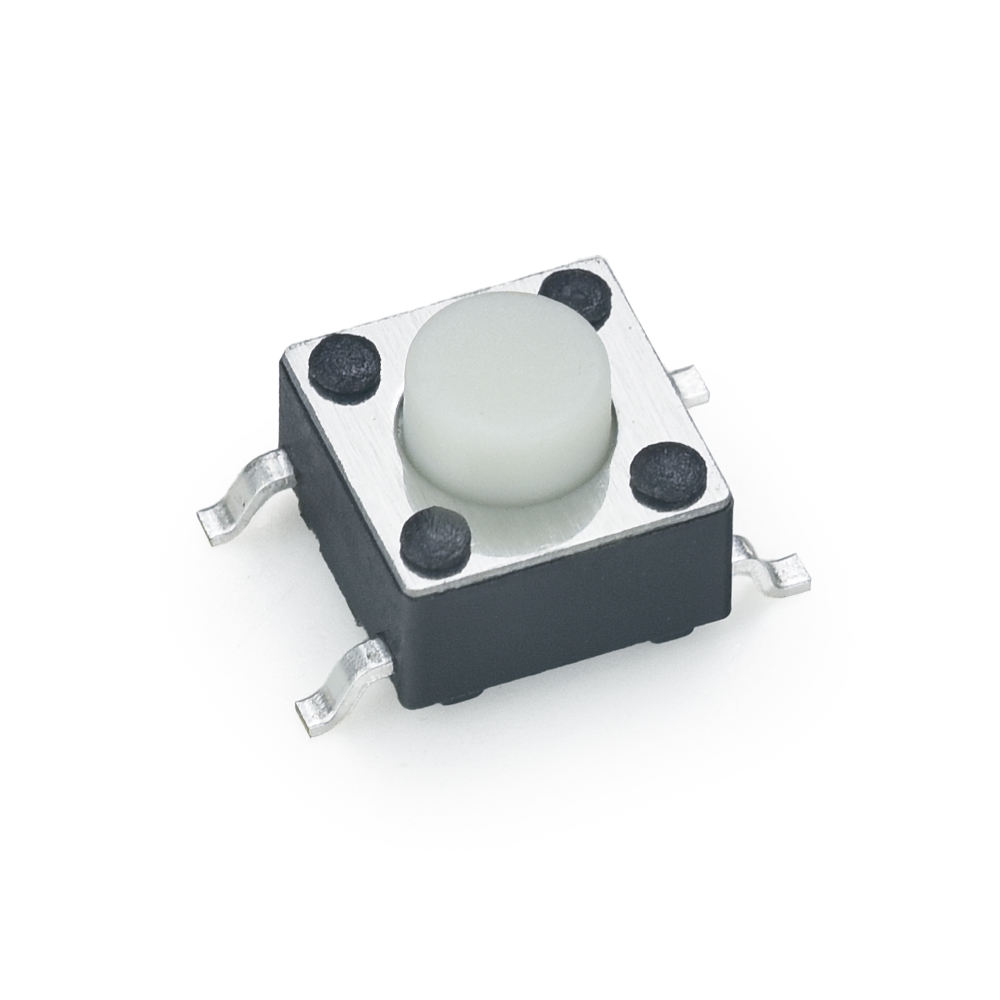
Interfaces that once dictated how we work are now bending to our habits. Instead of forcing users through rigid workflows, modern design lets people shape tools around their own mental models. That might mean a dashboard where widgets can be dragged into a personally logical order, or a palette of tools that learns which ones you reach for most. The shift is subtle but profound—software no longer feels like a borrowed desk but a space you’ve arranged yourself.
What powers this flexibility is a quiet layer of modular architecture. Designers now build with component systems that anticipate variation, allowing features to be swapped or recalibrated without breaking the whole. It’s why one person’s minimalist note-taking app can be another’s project-management beast. By separating structure from surface, these interfaces invite users to renegotiate the terms of interaction each time they log in, making the tool feel surprisingly personal.
Yet the real magic isn’t in the settings panel—it’s in how customization recedes. The best adaptive interfaces don’t shout about their malleability; they simply present relevant options based on context, time of day, or recent behavior. A graphic editor might surface the pen tool when a tablet is detected, or a reading app could shift to a warmer palette after sunset. These quiet adjustments turn customization from a chore into a conversation, where the interface listens as much as it responds.
Durability Meets Design: Engineering for the Real World
In a world where products are often discarded at the first sign of wear, we take a different approach. Our engineering process begins not with aesthetics, but with the question: how will this hold up under real-world conditions? We study the daily abuses—drops, spills, weather extremes—and design from the inside out. Materials are chosen for their endurance, joints are reinforced beyond industry standards, and every prototype undergoes relentless testing. The result is a product that doesn’t just survive the unexpected; it shrugs it off and keeps performing, day after day.
But resilience shouldn’t come at the cost of elegance. We believe that true design intelligence lies in making durability invisible. Clean lines, tactile surfaces, and thoughtful proportions aren’t afterthoughts—they’re integral to the structure. By fusing ruggedness with refinement, we create devices that feel at home in a workshop or a boardroom. The scratches and scuffs that would mar a lesser product become part of its story, blending seamlessly into a patina that only deepens over time. This is design that doesn't fear the future; it embraces it, knowing it has been built to outlast trends and fads.
The real world isn't a controlled environment, and our engineering reflects that. From the factory floor to the hiking trail, we consider how people actually interact with what they own. Buttons are made to work with gloves on, seams are sealed against dust and moisture, and everything is balanced for one-handed use without feeling precarious. We don't chase minimalist ideals that shatter on impact; instead, we craft objects that earn their place in your life through quiet, reliable service. When design and endurance work together, you stop worrying about protecting your gear and start living with it—that's the point where engineering truly matters.
From Function to Experience: Redefining User Engagement
In today's digital landscape, the measure of a product's success has shifted dramatically. It's no longer enough to simply deliver a set of features that work. People crave something more—a sense of delight, a feeling of being understood. This is where the leap from function to experience becomes critical. When a tool bends seamlessly to a user's needs, it sparks a subtle but powerful connection that keeps them returning.
Think about the apps you use every day. The ones that stick aren't always the most feature-rich; they're the ones that make everyday tasks feel effortless and even pleasant. This transformation hinges on designers paying attention to the micro-moments—the satisfying haptic feedback of a button press, the clever animation that guides without interrupting, the way content adapts to your habits. These details shape a user's emotional landscape, turning a utility into a companion.
Ultimately, redefining engagement means accepting that every interaction is a chance to tell a story. It's about crafting a journey where the user feels like the protagonist, not just a task-completer. By weaving personality, empathy, and surprise into the fabric of the interface, we elevate the mundane into something memorable. That's the new benchmark: experiences that resonate long after the screen is off.
Miniaturization and the New Era of Compact Interfaces
As components shrink to nanoscopic scales, the very fabric of device interaction is being rewoven. The drive toward miniaturization has pushed interface design into a space where physical tactility meets digital precision, creating a delicate balance between user expectation and engineering possibility. What was once a world of oversized knobs and rigid screens now bends, flexes, and responds to the slightest gesture, merging the interface into the object itself.
This new era treats surface area not as a limitation but as a canvas for context-aware minimalism. Compact interfaces rely on subtle cues—haptic feedback, micro-LED indicators, and shape-shifting materials—to convey information without overwhelming the senses. The result is a quiet sophistication where complexity hides beneath a seamless exterior, inviting users to explore through intuition rather than tutorial.
Behind the scenes, the real challenge lies in power management and thermal efficiency at micro scales. Engineers are rethinking circuit architectures to sustain rich interactive experiences without compromising battery life or device integrity. In doing so, they are not just shrinking technology but fundamentally redefining how we connect with the tools that fit in our pockets or even on our skin.
Sustainable Practices in High-Performance Switch Production
Building high-performance switches with sustainability in mind starts long before the first component hits the assembly line. It means rethinking material sourcing, favoring suppliers who offer recycled metals and bio-based polymers without compromising conductivity or durability. We've seen a shift toward modular designs that let manufacturers upgrade individual parts rather than scrapping entire units, directly cutting e-waste. A switch rated for a million cycles shouldn't just be reliable—it should be repairable and recyclable at end-of-life, with clear disassembly paths designed in from day one.
Energy efficiency during production is often overlooked but makes a substantial difference. Facilities are now integrating smart manufacturing tools that optimize power use in real time, from precision welding stations to automated testing rigs. Waste heat recovery systems capture thermal energy from soldering processes and redirect it for other factory needs. Even the choice of plating methods matters: transitioning from traditional electroplating to more targeted techniques reduces chemical baths and rinse water, lowering both pollution and operational costs.
Beyond the factory floor, packaging and logistics play a quiet but critical role. Ditching single-use plastics for molded fiber inserts and water-activated tape seems simple, but it requires retooling entire packaging lines. Some producers are adopting reusable shipping containers that cycle between the factory and assembly partners, drastically cutting cardboard consumption. Tracking the carbon footprint of each component—down to the resin in the switch housing—helps prioritize decisions that genuinely reduce environmental impact without sacrificing the performance that high-reliability industries demand.
FAQ
A tact switch is a small electromechanical component that gives you that satisfying click or physical feedback when pressed. Unlike membrane switches that can feel mushy, tact switches provide a definite actuation point you can actually feel. This crisp feedback is what makes buttons on everything from high-end keyboards to car steering wheel controls feel responsive and reliable. Without them, users would constantly second-guess whether their input registered—a critical failure in fast-paced or safety-critical environments.
Top ODMs are moving far beyond simple on-off switches. They're now integrating haptic drivers, programmable force curves, and even miniature load cells directly into the switch package. This means a single switch can simulate different click feels through software—firm for a power button, softer for a menu scroll, or even a double-click sensation for different functions. Some are embedding RGB LEDs with micro-diffusers so the entire switch surface glows, not just a tiny indicator. These aren't just commodity parts anymore; they're becoming complete sub-systems that give product designers immense creative freedom.
In saturated markets like gaming peripherals, TWS earbuds, and smart home devices, the 'feel' of a button is one of the last physical touchpoints a brand can truly own. Off-the-shelf switches all behave similarly. ODMs that offer tight collaboration from concept to mass production allow companies to define a unique tactile signature: a precise actuation force, a distinct travel distance, and even a characteristic click sound. This becomes part of the brand's sensory identity—think of the iconic click of a high-end car's rotary controller. It's a subtle but powerful differentiator that competitors can't easily copy without the same supply chain relationship.
Engineering miniaturization without sacrificing tactile quality is a huge challenge. Leading manufacturers use novel contact dome geometries, ultra-thin metal alloys, and precision-molded bases to reduce height to under 1mm while maintaining that crisp over-center snap. They're also developing edge-mount and right-angle configurations that let the switch sit flush with a curved surface or behind a thin overlay, eliminating bulky protrusions. Some are even combining the switch with capacitive sensing, so a device can be sleek and buttonless-looking yet still provide physical feedback exactly where needed—a hybrid approach that's perfect for modern appliance panels or automotive interiors.
Tactile feedback is a non-negotiable safety feature in many contexts. In a car, you can feel a steering wheel control without taking your eyes off the road. In medical equipment, a positive click confirms a critical setting change even through surgical gloves. Leading ODMs are now designing switches with clear auditory cues as well, which benefits visually impaired users. Some are researching textured surfaces that guide a finger to the correct position, and even variable feedback that intensifies near the actuation point. This isn't just about luxury—it's about reducing cognitive load and preventing errors in high-stakes environments.
The days of a 100,000-cycle switch are long gone. Premium ODMs now routinely deliver 5 to 10 million actuation lifetimes by using self-cleaning contact systems, precious metal alloys that resist oxidation, and sealed structures that keep out dust and moisture. They're also employing advanced testing rigs that simulate real-world abuse—like off-axis presses, extreme temperatures, and humidity cycling. The data from these tests feeds back into design refinements. For example, some manufacturers use a double-dome mechanism where a secondary spring takes over if the primary dome fatigues, ensuring the switch feels consistent right up to the end of its life.
Conclusion
Leading ODM tact switch manufacturers are quietly transforming how we interact with devices, moving beyond mere functionality to craft experiences that feel intuitive and alive. The silent revolution in tactile feedback is being driven by advanced haptic engineering, where every micro-motion is precisely tuned to deliver satisfying, responsive clicks without audible noise—perfect for discreet medical tools or premium consumer electronics. At the heart of this shift lies a deep commitment to customization; these firms collaborate closely with brands to design switches that match unique ergonomic curves, actuation forces, and even the subtle texture of a fingertip press. The result is interfaces that feel less like mechanical components and more like natural extensions of human intent, blurring the line between user and machine.
Durability no longer means bulky, unsightly components. Modern ODM partners engineer switches that withstand millions of cycles in harsh environments—from factory floors to underwater gear—while integrating sleek, minimalist profiles that push miniaturization boundaries. This compact efficiency enables designers to embed responsive controls into paper-thin wearables and edge-to-edge touchscreens, ushering in an era where interfaces vanish into form. Yet the most forward-looking shift is experiential: manufacturers now treat a button press as a moment of engagement, layering dynamic feedback patterns that can guide users without visual clutter. Alongside this, sustainable production methods—using recycled metals and energy-efficient lines—ensure that high-performance switches leave a lighter footprint, aligning next-gen interfaces with global responsibility. Together, these innovations are turning everyday touchpoints into quiet storytellers of brand identity and user delight.
Contact Us
Contact Person: Anna lin
Email: [email protected]
Tel/WhatsApp: +86 13567768885
Website: https://www.kjele.com/