
Custom Power Tool Switch Supplier: Key Factors for Quality and Performance
2026-06-28
In the competitive landscape of power tool manufacturing, every component counts. Yet, the switch—literally the control center—is often underestimated. Sourcing from a reliable custom power tool switch supplier is about more than just cost; it’s about ensuring consistent quality, durability, and safety. Whether you’re an OEM seeking to upgrade your tools or a brand looking for a competitive edge, understanding the key factors behind switch performance is critical. Here, we’ll explore what sets top-tier suppliers like KEJIAN ELECTRONICS apart and how you can avoid common pitfalls.
Material Integrity: The Hidden Backbone of Switch Performance
It’s easy to overlook what a switch is actually made of when you’re chasing crisp tactility or a buttery linear stroke. But those satisfying keystrokes don’t happen by accident—they’re built on the quiet discipline of material selection. A housing that flexes too much will leach away precision; a stem molded from inferior plastic develops friction that no amount of lube can truly mask. The reality is that even a slight variance in resin composition or glass fiber content can shift the entire feel of a board, turning what should be a confident keypress into something spongy and uncertain.
Plastic blends used in top-shelf switches often incorporate POM, nylon, or polycarbonate—each chosen for a specific balance of stiffness, self-lubrication, and dimensional stability under heat. These aren’t afterthoughts: they dictate how sound waves travel through the case and up to your ears. A housing that warps under repeated actuation will gradually widen tolerances, introducing play that steals the very character you paid for. The switches that stay consistent after millions of cycles are the ones where the raw material wasn’t compromised from the start.
Even the metal components—springs and contact leaves—live or die by their metallurgy. A spring made from batch-inconsistent stainless steel won’t just drift in weight, it’ll corrode or fatigue long before its time, adding gritty ping that no dampener can fix. When builders chase that elusive “quality feel,” they’re really chasing material honesty: parts that hold their shape, keep their promise, and let the design speak without constant babysitting. Strip away the hype, and a switch’s long-term soul is bound to what it’s physically made of.
Precision Engineering: Where Customization Meets Function
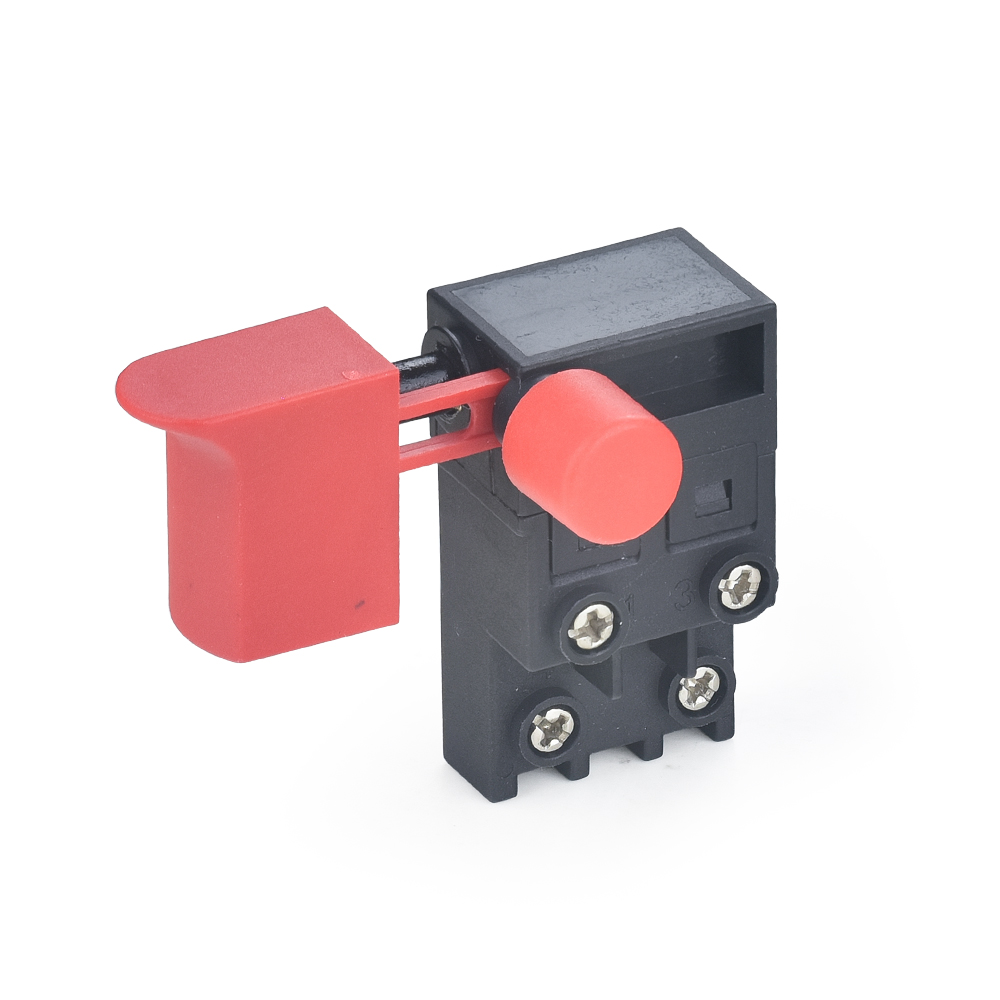
Precision engineering isn’t just about hitting a spec—it’s where intent takes physical shape without compromise. When a part needs to nestle into a tight assembly or endure stress that would fold a standard off-the-shelf piece, customization becomes the only path forward. We don’t shoehorn function into a catalog box; we start with the demands of the application and build outward, grain by grain, until the geometry itself feels inevitable.
Every micron tells a story of trade-offs carefully unwound. A slightly thicker wall here, a radius there that no template would ever suggest—these are the quiet decisions that separate a component that merely fits from one that elevates the whole mechanism. The craft lies in knowing when to lean on decades of material intuition and when to let a fresh approach override convention. It’s a dialogue between the machinist’s instinct and the cold math of stress vectors, often ending with a solution that looks deceptively simple.
The result isn’t just a functional piece—it’s a quiet signature of thoughtfulness. In industries where failure isn’t an option, this blend of bespoke design and exacting execution turns what could be a bottleneck into a competitive edge. No fanfare, just parts that do exactly what they’re meant to, time after time.
Stress-Tested Reliability: Ensuring Longevity in the Field
Every component we manufacture endures a battery of rigorous simulations before it ever leaves the facility. These aren’t just standard checklists—they push beyond typical operating extremes. Thermal cycling chambers alternate between scorching heat and bitter cold, while vibration tables mimic years of transit abuse in a matter of hours. The goal isn’t simply to find the theoretical breaking point, but to understand how materials and joints degrade over time, so we can reinforce them early in the design phase.
What sets our approach apart is the insistence on mixed-stress profiles, where temperature, humidity, and mechanical load converge simultaneously. Most testing regimens isolate these factors, but real-world conditions never do. By layering stressors, we uncover failure modes that sequential testing might miss—like a connector that corrodes only when thermal expansion repeatedly breaks its protective coating. These insights get fed directly back into manufacturing, creating a feedback loop that continuously tightens tolerances and hardens weak spots.
Tailored Solutions: Why Off-the-Shelf Falls Short
Every business carries its own rhythm, shaped by unique workflows and customer expectations. When you plug in a generic, off-the-shelf product, you force your operations into someone else's mold. The result is rarely seamless—teams wrestle with features they don't need while lacking capabilities that could truly move the needle.
Off-the-shelf tools often promise quick deployment, but the hidden cost comes later: endless workarounds, fragmented data, and a support team that can't prioritize your niche requests. Tailored solutions flip that equation. They start with your actual processes, not a one-size-fits-all blueprint, so every piece of functionality earns its place.
More than just fitting today's needs, a purpose-built system flexes as you evolve. Instead of waiting for a vendor's roadmap to align with your ambitions, you steer the direction. That kind of alignment isn't a luxury—it's how resilient companies outpace competitors who settle for good enough.
Streamlined Production: Quality Control at Every Step
Our production line isn't just about speed—it's a tightly integrated system where every machine operator doubles as a quality inspector. Before a single component moves to the next station, it passes a hands-on check that goes beyond automated scans. We've built in pause points that let the team catch variances in real time, so a subtle color mismatch or a micro-fracture never slips through.
What sets this apart is that we treat quality data as a live conversation. Sensors feed information back to the engineers instantly, but the real difference comes from the daily stand-ups where production leads discuss those readings and adjust thresholds on the fly. It's not about generating reports—it's about preventing the drift before it becomes a defect.
From raw material intake to final packaging, every step owns a verification checklist that's both digital and physical. We cross-reference supplier certificates against our own spectroscopy results at receiving, and conduct pull tests on random samples during assembly. The result is a rhythm where excellence isn't an audit afterthought but the default cadence of the floor.
Partnership Value: Beyond the Transaction
True partnership extends far beyond signing a contract or closing a deal. It’s rooted in a shared vision and a commitment to grow together over time. When both sides invest in mutual understanding and long-term goals, the relationship becomes a strategic asset that can adapt to market shifts and uncover unexpected opportunities.
Beyond the transaction lies a deeper layer of trust and collaboration. Partners who prioritize open communication, joint problem-solving, and co-innovation build resilience into their operations. This transforms a simple vendor-client dynamic into an alliance capable of weathering disruptions and driving sustainable value that isn’t captured in a single balance sheet.
Ultimately, the measure of a partnership isn’t found in the initial terms but in the legacy it creates. It’s about the ideas sparked, the risks shared, and the collective achievements that neither party could have realized alone. By moving past a purely transactional mindset, organizations unlock a form of value that compounds—strengthening both sides for the challenges ahead.
FAQ
You'll want to check the contact materials and housing design. High-quality switches typically use silver alloy contacts for better conductivity and wear resistance, and the housing should be made of robust, heat-resistant plastics that can survive drops and vibration on the job site.
The switch directly controls current flow, so specifications like contact rating and actuation force matter. A well-matched custom switch ensures consistent power delivery, reduces arcing, and prevents premature tool failure, especially in high-demand applications like angle grinders or hammer drills.
Because off-the-shelf switches rarely fit perfectly. A good supplier works with your team to optimize the switch's electrical and mechanical parameters—like travel distance, detent feel, and integrated functions (e.g., brake or lock-on)—which refines ergonomics and safety for your specific tool.
They should meet industry standards such as UL, IEC, or EN for electrical life, overload, and endurance. Look for suppliers who conduct in-house tests for thermal cycling, dust/water ingress (IP rating), and mechanical shock to simulate real-world abuse.
Ask to see their experience with integrating electronics like speed controllers or trigger potentiometers. A capable supplier will have in-house PCB assembly and testing capabilities, and can provide samples that demonstrate smooth speed ramping and minimal deadband.
Safety features like double-pole switching, lock-off buttons, and overload protection are critical. Custom designs allow you to place these elements intuitively, ensuring the user can quickly stop the tool under duress, which is especially vital in construction or manufacturing environments.
Yes, they can navigate different regional certifications (like CCC for China or UKCA for Britain) and ensure consistent quality across batches. This reduces your compliance risk and lets you scale production without supply chain hiccups.
Watch for vague specifications, reluctance to share test data, or inability to provide detailed failure analysis. If samples show inconsistent actuation force or excessive sparking, it's a sign they cut corners on materials or assembly precision.
Conclusion
In high-demand power tools, a switch is far more than a simple on-off mechanism—it's a critical interface where material integrity, precision engineering, and relentless testing converge. The right custom switch supplier understands that material selection forms the backbone of performance, using high-grade contacts, robust housings, and arc-resistant components to withstand intense electrical loads and environmental extremes. Precision engineering then transforms these materials into ergonomic, trigger-responsive designs that match exact tool contours and user demands, moving well beyond generic catalogs. Tailored solutions mean every switch is born from close collaboration, integrating overload protection, dust sealing, or multifunction capabilities that off-the-shelf units simply can't offer.
Yet design alone isn't enough. True reliability comes from rigorous stress-testing that simulates years of heavy field use—cycling through thousands of actuations under heat, vibration, and dust exposure to eliminate weak points before production. Streamlined manufacturing with embedded quality checks at each stage ensures that every switch leaving the line performs identically, drastically reducing warranty returns and field failures. Beyond the component itself, a true partnership value emerges: a supplier who works side-by-side with R&D teams, offers rapid prototyping, and maintains transparent communication becomes an extension of your engineering force, driving innovation and long-term product excellence.
Contact Us
Contact Person: Anna lin
Email: [email protected]
Tel/WhatsApp: +86 13567768885
Website: https://www.kjele.com/