
Commercial Ozone Generator Manufacturer: Key Questions to Ask Before Choosing a Partner
2026-09-22
Most ozone generator buyers start with output and price. Then the real questions begin: How long will the electrodes last? Are the ozone output claims independently verified? What happens when a unit fails in the middle of a production run? The difference between a supplier and a true partner comes down to how they answer those questions. That's why we encourage you to put every manufacturer—including LUFUTATECH—through the same checklist before you commit.
Will the Ozone Output Stay Consistent When Your Process Load Shifts?
Process loads rarely hold still in real-world operations. A sudden drop in water flow, a spike in contaminant concentration, or a line slowdown can all ask the ozone system to adjust on the fly. The key question isn't whether the load will shift, but how tightly the ozone output tracks those changes. Most modern generators rely on closed-loop control that monitors a critical variable—often dissolved ozone residual or oxidation-reduction potential—and trims power to the dielectric cells accordingly. That feedback loop, when properly tuned, keeps output within a narrow band even as demand swings by 20 or 30 percent.
Where systems often stumble is in the lag between sensing a shift and adjusting the generator. If the residual probe sits too far downstream, the control loop reacts late, causing brief over- or under-dosing. Likewise, generators that run fixed power settings based on an assumed load will drift off target the moment reality deviates from design assumptions. A well-designed system pairs fast-acting sensors with a control algorithm that anticipates load changes rather than just responding to them.
Ultimately, consistency under load shifts isn't a single spec you can read off a datasheet—it emerges from the interplay of sensor placement, control logic, and the generator's turndown capability. Ask your vendor for test data showing output stability during simulated load steps, not just steady-state performance. The answer will tell you more than any marketing claim ever could.
What Really Happens When a Critical Component Fails After Installation?
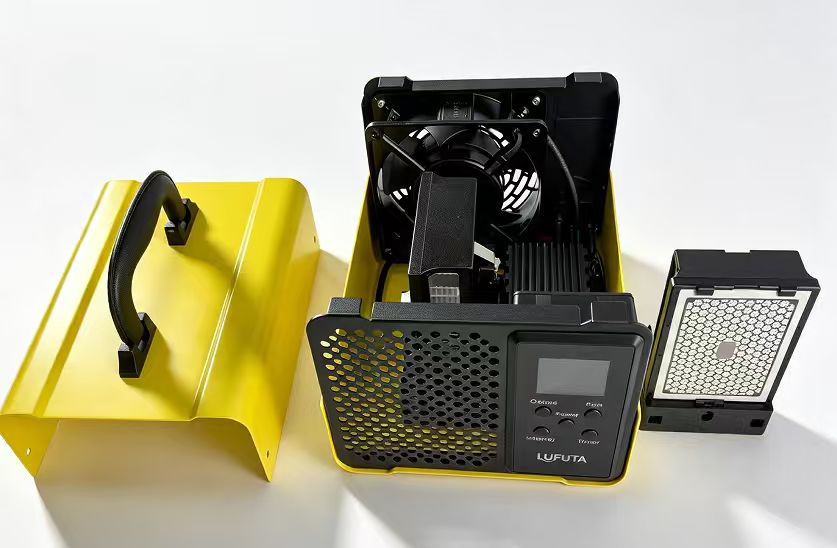
When a critical component gives out after installation, the initial sign is often subtle—a slight lag, an intermittent error code, or a heat signature that doesn't match the baseline. Teams that skip post-install validation typically catch the failure only after it begins cascading. In one industrial setup I saw, a failed pressure regulator on a newly commissioned line didn't trip any alarms for six hours. By then the downstream pump had been running dry long enough to score its impeller, which turned a simple seal replacement into a full bearing and shaft rebuild.
The real problem isn't the component itself; it's the assumption that "new" equals "healthy." Installation introduces variables like misalignment, contaminated fittings, or firmware mismatches that don't show up on a pre-ship test. Once the part fails under load, the system's protective logic may or may not isolate it correctly. If the failure is on a shared bus or a common manifold, you get simultaneous faults across unrelated subsystems. That's when troubleshooting becomes a guessing game, and the root cause report starts pointing at everything except the actual failed part.
A reliable post-install routine catches most of these before they become production nightmares. You run a full-load soak test, watch the trend data for the first 48 hours, and compare the component's behavior against its own pre-installation signature. Without that baseline, a "sudden" failure is rarely sudden—it's just the first time someone looked at the right gauge.
Can Their Units Handle Your Facility's Dust, Humidity, or Corrosive Air?
Facility environments rarely match the clean, steady conditions shown on spec sheets. Dust from nearby processes, persistent humidity that never quite dries out, or corrosive fumes drifting from adjacent lines all take a toll on internal electronics, seals, and metal housings. Before a unit gets bolted into place, it's worth asking whether its cooling fans, circuit boards, and connectors are actually rated for what they'll breathe every shift.
Many standard units assume filtered office air or mild workshop conditions, so they fail quietly months after installation once dust packs into heat sinks or moisture starts creeping across solder joints. Corrosive atmospheres accelerate the damage, eating away at exposed copper traces and uncoated aluminum fins. The difference often comes down to conformal coatings, sealed enclosures, and corrosion-resistant alloys that don't show up in basic marketing photos but matter more than any horsepower rating when the air itself is working against you.
If your facility has visible dust buildup on ledges within days, condensation on pipes during humid months, or a faint chemical smell near certain production areas, treat those as warning signs for any new equipment. Request actual test data or field references from similar environments, not just an IP rating printed in a brochure. The right unit won't just survive your air conditions—it will keep performing without constant filter swaps or early board replacements.
Are Their Safety and Compliance Documents Current Enough to Withstand an Audit?
Auditors rarely spend much time on the overall safety culture before they start flipping through documents. What they look for first is a date. If the cover page shows a review from three years ago, or the revision history stops abruptly, the rest of the audit becomes an uphill battle. Outdated documents are not just a minor paperwork issue; they suggest that the compliance program has been running on autopilot.
A common failure point is when a regulation changes but the internal documents do not. For example, a hazard communication program that still references the older classification criteria, or a training record template that does not match the current OSHA requirements, can easily lead to a citation. The auditor may not expect every document to be flawless, but they do expect to see a clear trail of updates tied to a calendar, not just a folder of static files.
The simplest way to stay ahead is to treat document control as a recurring task rather than an annual scramble. Assign someone to check the master list every quarter, update the version number even for small wording changes, and keep a short note on what prompted the update. When the auditor asks how you know a document is current, you should be able to point to that log within seconds. Without that evidence, a well-meaning binder is little more than decoration.
Who Actually Responds When You Need a Replacement Part on Short Notice?
When a machine goes down and production stalls, the call for a replacement part rarely lands on a generic help desk. It reaches whoever happens to be on the other end of a direct line, a text thread, or a supplier portal that someone actually monitors. In many cases, that person isn't a dedicated account manager but a floor supervisor or a purchasing agent who has learned which vendors pick up after hours and which ones let the phone ring.
The real responders are often the ones who keep personal contacts with local distributors, or who know that a certain technician at the OEM will answer a weekend email. They don't rely on a ticket system to flag urgency; they call, text, or message until they get a human. And when the part can't be sourced from the usual chain, they're the ones digging through aftermarket suppliers, checking for compatible substitutes, or even driving to a neighboring facility to borrow a spare. Short notice doesn't wait for a workflow, and neither do they.
That kind of response depends less on company policy and more on individual initiative. It's the maintenance lead who has a drawer of saved packing slips and a mental map of who stocks what within a fifty-mile radius. It's the buyer who once got burned by a late shipment and now keeps three backup contacts for every critical component. When the deadline is measured in hours, those are the people who make the difference, even if their names never appear on an org chart.
Which Long-Term Clients Keep Reordering, and What Do They Say Off the Record?
The clients who keep reordering year after year aren’t always the biggest accounts. Often they’re mid-sized buyers who value one or two specific things: a reliable lead time and a product that doesn’t drift in spec. They rarely leave public reviews, but in private calls they admit they’ve tried cheaper alternatives and came back after a single bad shipment.
Off the record, the same names keep surfacing. A purchasing manager at a regional hardware chain mentions he doesn’t care about the logo on the box; he cares that the last three containers arrived within the same five-day window. Another long-term client, a family-owned distributor, says she sticks around because when something goes wrong, the fix is a phone call, not a ticket queue. These aren’t things that show up in testimonials.
The pattern is clear: repeat orders come from clients who have a personal rhythm with the supplier. They send the same PO format, ask for the same slight overage, and expect the same person to answer. What they say off the record is usually more blunt: “I don’t have time to train a new vendor.” That bluntness is the real retention metric.
FAQ
We build our cells with 316L stainless steel electrodes and ceramic dielectric tubes. That combination resists nitric acid byproduct corrosion, which is usually what kills cheaper units. In continuous-duty water treatment, these cells typically run 15,000 to 20,000 hours before output drops by 10%.
Yes. Ask for logged data rather than brochure numbers. For example, if you're using air-fed systems with 60% relative humidity, we can provide a year's worth of daily ozone output readings from a client in a comparable climate. Watch for manufacturers that only show oxygen-fed lab results.
Output falls as temperature and moisture rise, but our power supplies adjust frequency and voltage to maintain setpoint within ±5%. The controller monitors dew point and derates only when necessary, so you don't get a sudden loss of treatment capacity.
Ask for UL 61010-1 or equivalent ETL listing, plus CE if relevant. More importantly, confirm the certification covers the complete assembled skid, not just the power supply. We include interlock circuits for vacuum, overpressure, and door-open shutdown as standard.
Our support is handled by the same engineers who built your unit, not a call center. We contract a 4-hour response window, and for critical water treatment we keep a spare ozone cell and power board stocked locally. That's more valuable than a generic warranty.
We can provide Modbus TCP, Profinet, or 4-20mA outputs. If your automation uses something less common, our engineering team will build a custom communication gateway. Avoid manufacturers that insist you buy their monitoring software just to read ozone concentration.
Absolutely. We bring a calibrated UV photometric analyzer and run the generator at 50%, 75%, and 100% capacity while your team observes. The acceptance criteria are written into the purchase agreement, so there's no dispute about what 'working' means.
We stock replacement power supplies for every model sold in the last ten years. Typical shipping from our regional warehouses is three business days. The out-of-warranty cost runs around $1,800 to $3,500 depending on capacity. If a manufacturer can't answer this immediately, expect your downtime to be measured in weeks.
Conclusion
Ask the manufacturer how ozone production holds up when your process load shifts from light to heavy within the same day. A unit that only performs at a fixed setpoint may leave you under-dosing or over-dosing once real demand fluctuates. You also want to know whether their machines have been tested in dusty, humid, or mildly corrosive air, not just in a clean lab. Look for evidence of sealed electrical compartments, coated internals, and filter options that match your actual site. Equally important is the paperwork: request current safety data sheets, wiring diagrams, and third-party certification reports. If the documents are dated or incomplete, an unannounced audit can become a serious problem. A partner who keeps these records updated without you having to chase them saves time and lowers risk.
When a critical component fails after installation, the response pattern matters more than the warranty wording. Ask for a named service contact and a realistic parts dispatch time, not just “24/7 support.” Find out which replacement parts are stocked regionally and which require a long factory lead time. Then go beyond the sales pitch: ask for contact details of clients who have been reordering for several years. Speak to them off the record and ask what happened when something broke, how fast the manufacturer reacted, and whether the ozone output remained stable through seasonal changes. Long-term customers who keep buying despite occasional failures often reveal the true quality of the partnership. That type of unfiltered feedback tells you more than any brochure ever will.
Contact Us
Contact Person: Paul Luo
Email: [email protected]
Tel/WhatsApp: 0086-19966314501
Website: https://www.lufutatech.com