
China Micro Switch Factory Insights: Quality Production and Global Supply
2026-06-21
In the world of micro switches, China has emerged as a manufacturing powerhouse, blending sophisticated automation with rigorous quality control. Yet, not all factories are created equal. Discover what sets high-performing producers apart, including insights from KEJIAN ELECTRONICS, a name that redefines excellence in this space. From precision engineering to seamless global logistics, this blog explores how the right partner can elevate your supply chain.
The Evolution of Micro Switch Manufacturing in China
China's micro switch manufacturing sector started from humble beginnings in the late 20th century, when small workshops primarily replicated basic designs from overseas. These early ventures catered to simple domestic appliances, gradually building the foundational know-how through trial and error. Despite a heavy reliance on imported components and outdated tooling, they managed to establish a foothold in price-sensitive markets, setting the stage for incremental improvements.
The real transformation kicked in during the early 2000s as consumer electronics boomed. Manufacturers began investing in automated assembly lines and precision molding, dramatically boosting consistency and output. This period also saw a shift toward miniaturization, driven by demand from smartphones and wearable devices. Local firms started collaborating with academic institutions to refine contact materials and actuator designs, slowly shedding the copycat reputation.
Today, the industry has matured into a hub of innovation, with Chinese producers pushing into high-reliability sectors like automotive safety systems and medical equipment. Advanced facilities now integrate laser welding and AI-driven quality checks, ensuring switches can endure millions of cycles under harsh conditions. As electric vehicles and smart factories rise, manufacturers are tailoring ultra-compact, sealed units that meet stringent global standards, cementing China's role as a pivotal player in the global supply chain.
Precision Engineering Behind Every Component
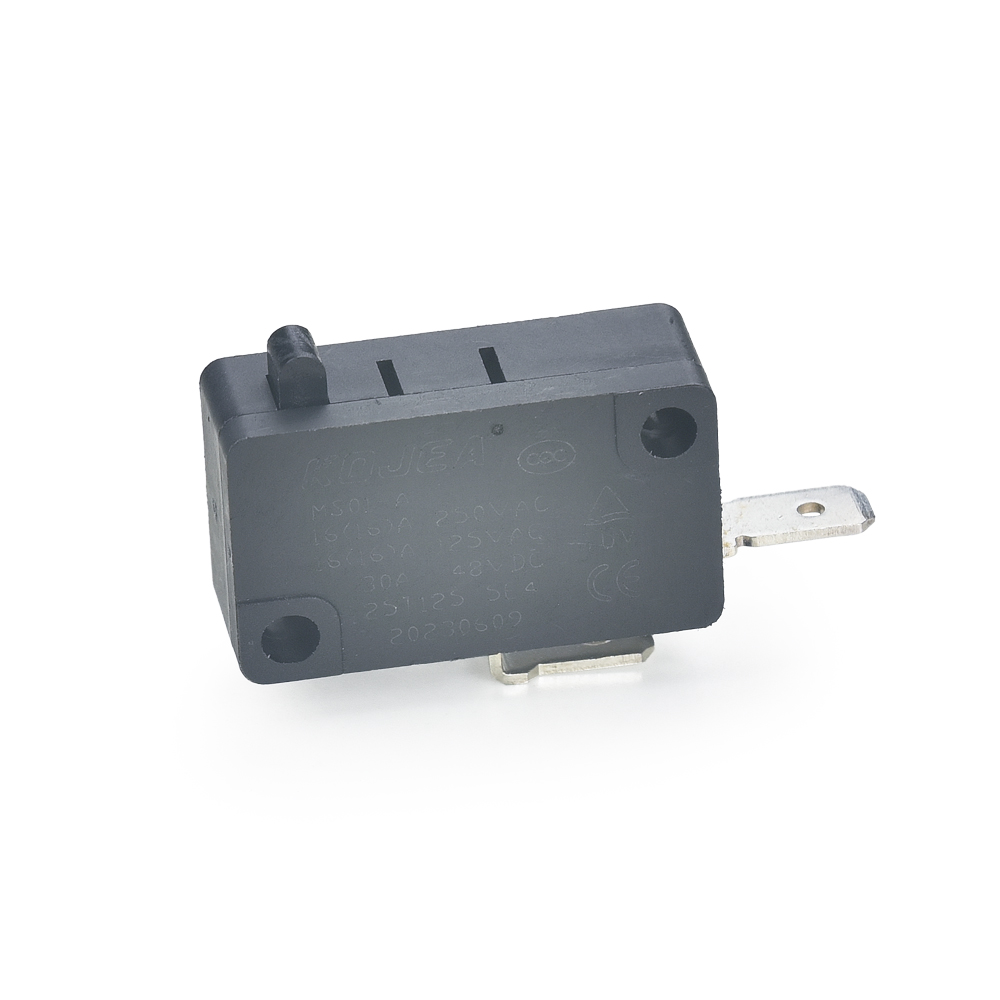
Every gear, shaft, and housing that leaves our facility carries the invisible signature of obsessive attention to detail. We don't simply machine parts to a specification; we interrogate the blueprint, questioning every tolerance stack and potential stress riser before the first cut is made. This mindset means our engineers often spend as much time refining the manufacturing process as they do designing the component itself, ensuring that what works on screen translates flawlessly into the physical world.
Our shop floor operates under a philosophy of quiet discipline. Temperature-controlled metrology labs sit steps away from the CNC cells, allowing for immediate in-process verification with equipment that resolves down to fractions of a micron. The dialogue between machinist and measurement is constant, not a final gate check. This tight loop catches deviations while they are still theoretical, making perfection less an aspiration and more a byproduct of the system.
What truly sets the work apart, however, is the refusal to outsource critical thinking. When faced with exotic alloys or geometries that push the boundaries of subtractive manufacturing, our team doesn't retreat to standard feeds and speeds. They experiment, document, and develop custom toolpaths that treat each batch as a unique problem to be solved. The result is a portfolio of components that don't just meet the drawing—they embody a deeper understanding of how form, material, and function intertwine under real-world loads.
Quality Control That Goes Beyond Standards
Quality control here is not about ticking boxes on a checklist. It’s a living process that constantly questions whether a product truly meets the needs it was designed for. We look beyond mandated tolerances and into the real-world performance, durability, and even the subtle feel of a component. Our teams are empowered to halt production if something simply doesn’t sit right, because intuition honed by decades of experience often catches what no specification can.
Every inspection becomes a feedback loop, not a final verdict. Data from the floor flows directly into design adjustments, supplier conversations, and operator training—sometimes within hours. We treat deviations as insights, not failures, and this mindset has led to process tweaks that elevated quality beyond any formal benchmark. It’s not unusual for a veteran technician to collaborate with a supplier’s engineer on a Saturday, refining a texture or a weld until it exceeds both expectations and standards.
This approach has cultivated a culture where quality is personal. When a shipment arrives at a client’s site, it carries the signature of that collective obsession—no stamp or certificate can convey it. Our return rates have dwindled not because we adhere to stricter rules, but because we’ve blurred the line between quality control and craftsmanship.
Scaling Production Without Compromising Consistency
Expanding output often tempts teams to chase speed at the cost of uniformity, but the real challenge lies in weaving reliability into every additional unit. It's not merely about adding more machines or shifts; it's about designing processes that self-correct and communicate. When a production line doubles its pace, the hidden variables—material variance, operator fatigue, environmental shifts—amplify, and consistency erodes unless the system is built to absorb these fluctuations seamlessly.
The secret weapon is often standardization that doesn't suffocate flexibility. Think of it as crafting a vivid recipe that any skilled chef can follow, yet still leaves room for instinct when the tomatoes aren't quite ripe. In manufacturing, this translates to real-time monitoring paired with adaptive controls. A sensor detecting a slight temperature drift shouldn't just flag an error; it should nudge the parameter back into range before the product ever leaves spec. This kind of embedded intelligence preserves the character of the output no matter how many are made.
Human insight remains the linchpin. Machines repeat, but people understand nuance. Cultivating a culture where operators are empowered to pause and fine-tune, rather than blindly chasing quotas, creates a safety net that automation alone can't provide. When scaling is approached as an evolution of craftsmanship rather than mere replication, consistency becomes part of the company's DNA—not just a quality metric, but a natural rhythm that hums through every line, shift, and batch.
Streamlined Logistics for Reliable Global Delivery
We’ve stripped away the complexity that usually clogs up international shipping. Instead of juggling multiple carriers and patchwork tracking, our system connects every step—warehousing, customs, last-mile delivery—into one smooth flow. The result is fewer handoffs that invite delays, and a clearer picture of where your shipment sits at any given moment.
Reliability doesn’t come from rigid processes; it comes from smart adaptability. Our network adjusts on the fly to weather disruptions, port congestion, or sudden demand spikes. By leaning on local expertise and real-time data, we keep your goods moving even when circumstances turn messy. That means your customers get their orders without the usual headaches.
The real difference is how we handle the unglamorous details. From packaging that withstands rough transit to documentation that gets through borders without a hitch, every piece is designed to reduce friction. It’s not about grand promises—it’s about consistently landing each package where it needs to go, on time and intact.
Partnering with Factories That Prioritize Innovation
We seek out manufacturing partners who view innovation as a continuous journey, not a one-time milestone. These are factories where R&D teams work closely with production lines, constantly testing new materials, refining processes, and exploring sustainable alternatives. Their ability to adapt swiftly to emerging trends means our products stay ahead of the curve without compromising on quality or reliability.
In these partnerships, collaboration goes beyond the typical buyer-supplier dynamic. We engage in joint problem-solving sessions, share insights from customer feedback, and co-develop proprietary techniques that become competitive differentiators. This shared commitment to progress turns routine production runs into opportunities for meaningful improvements, whether it's reducing waste, enhancing durability, or achieving a more refined finish.
The result is a supply chain that feels alive with possibility. By aligning ourselves with forward-thinking factories, we ensure that every product embodies a spirit of inquiry and excellence. It's not just about keeping up with industry standards—it's about setting new ones, together.
FAQ
China's dominance in micro switch production stems from its mature supply chain, skilled workforce, and advanced automation. Factories benefit from clustered component suppliers, reducing costs and lead times. Continuous investment in precision molding and automated assembly ensures consistent quality at scale, making it a reliable sourcing destination.
Quality is maintained through rigorous testing at multiple stages—raw material inspection, in-process checks, and final functional tests. Many factories adopt ISO 9001 and IATF 16949 standards, using equipment like life-cycle testers and vision systems. Some also implement statistical process control to catch deviations early, ensuring each switch meets durability and performance specs.
Absolutely. Most Chinese manufacturers offer extensive customization options, from actuator styles and operating forces to terminal configurations and sealing levels. They work closely with clients to develop switches for unique environments, such as high-temperature or waterproof requirements, often providing rapid prototyping to speed up product development.
You'll find a broad range, including standard basic switches, subminiature types, sealed IP67 switches, and heavy-duty switches for industrial use. Many factories also produce specialized variants like dustproof models, long-life versions, and low-current switches for electronics, catering to industries from automotive to home appliances.
They are deeply integrated into global networks, offering flexible logistics and compliant certifications like UL, CE, and RoHS. Many have experience exporting to Europe, North America, and Southeast Asia, with dedicated international sales teams. Some even maintain overseas warehouses to shorten delivery times for key clients.
Direct sourcing often means lower costs without sacrificing quality, thanks to efficient production and economies of scale. Buyers get access to the latest designs and can work with engineers for custom solutions. Additionally, shorter communication lines and faster iteration cycles help resolve issues promptly.
Conclusion
China's micro switch industry has quietly transformed from basic component assembly into a discipline of exacting precision, where every actuator and contact point reflects decades of accumulated engineering know-how. The evolution here isn't just about faster machines or cheaper labor; it's a shift in mindset from making functional parts to crafting reliable interfaces that perform identically whether installed in a medical ventilator or a heavy-duty industrial door. Manufacturers have learned that true expertise lies in controlling metallurgy at the microstructure level, designing spring mechanisms that resist fatigue beyond standard life cycles, and embedding tight tolerances into automated production lines that still allow for rapid customization. Quality control in these facilities feels less like a checkpoint and more like a culture: in-process monitoring, noise signature analysis, and force-travel curve comparisons happen in real time, often exceeding the benchmarks set by international certification bodies. The result is a production ecosystem where a batch of ten thousand units upholds the same tactile response and electrical integrity as the first sample, even when volumes surge to meet sudden global demand.
Underpinning this manufacturing maturity is a logistics network built for predictability. Strategic warehousing near major ports, bonded zones, and partnerships with freight forwarders who understand the urgency of component shortages mean that a micro switch ordered on Monday often finds its way into a final product in Germany or North America by the end of the week. More importantly, the most progressive factories don't just fulfill specs; they co-engineer solutions. Collaborative projects with OEMs often involve tweaking actuator length or terminal plating to reduce assembly time on the customer’s line—a level of innovation that turns a commodity switch into a competitive advantage. This blend of precision, consistency, and responsiveness is what sets China's leading micro switch makers apart: they operate as integrated partners rather than distant suppliers, ensuring that quality production and global supply are not competing priorities but two sides of the same coin.
Contact Us
Contact Person: Anna lin
Email: [email protected]
Tel/WhatsApp: +86 13567768885
Website: https://www.kjele.com/